Solitaire - Classic Card Games
- 4.6
- Rating
- 10.00M
- Installs
- Free
- Price
 Analysis by App-foxy
I usually judge a solitaire game less by its first few minutes than by what happens after the novelty disappears. Many card games feel pleasant during an initial session, then become repetitive, cluttered, or too demanding to keep installed. Solitaire - Classic Card Games has made a stronger first impression on me because it stays focused on the familiar single-player card format while adding enough challenge to make short breaks feel worthwhile. It is a free card game from Oakever Games, rated for Everyone, and it has grown to more than 10 million installs with an average rating of 4.6 from roughly 366 thousand ratings.
That popularity makes sense, but it does not automatically make the game a good long-term fit for everybody. I found it most enjoyable when I treated it as a calm, repeatable habit rather than as a game I needed to play for hours. The basic appeal is immediate: open it, begin a hand, think through the available moves, and stop when the moment is over. There is no need to learn a complicated ruleset or coordinate with other players. At the same time, the familiar format means the experience depends heavily on presentation, pacing, and whether the daily routine still feels satisfying weeks later.
What the first week feels like
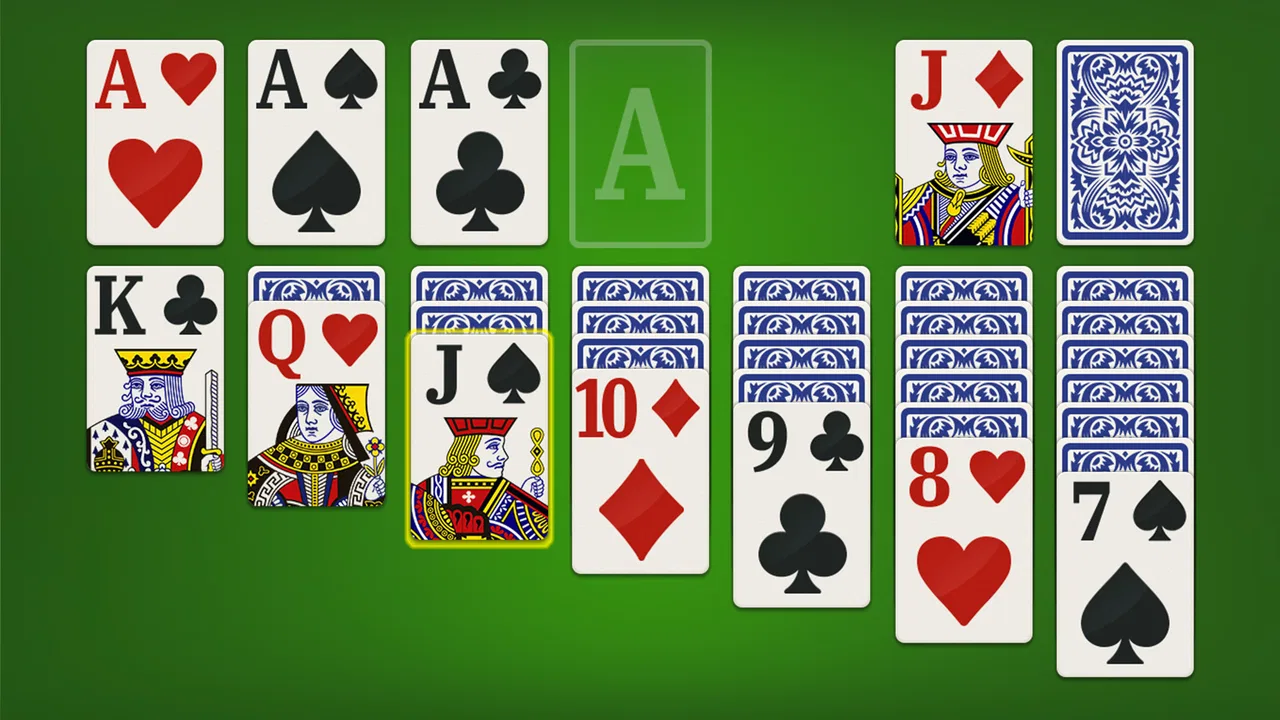
During the first week, the biggest strength is how little effort the game demands from the player. If I have a few minutes while waiting for an appointment or winding down before bed, I can start a hand without preparing anything. That makes it more approachable than many strategy games, where a short session can feel incomplete. Here, even a brief attempt can provide a clear beginning, a period of decision-making, and a natural stopping point.
You May Also Like

 Pandora - Music & Podcasts
Pandora’s Music Is Easy to Start, but Harder to Recover
Pandora’s strength is its low-effort path from a seed to a station. Its weak spot is how much confidence it asks you to place in connection, setup, and quiet recovery.

 8 Ball Pool
 Is Built on Rivalries, Rematches, and Routine
A close look at the rivalries, rematches, shared routines, and unanswered safety questions that turn a quick pool match into a persistent mobile community.

 Samsung Music
’s Quiet Strength Is Playing What You Already Own
Its reach comes less from spectacle than from dependable access to a personal library. That simplicity is both the app’s strongest retention engine and its ceiling.

 AccuWeather: Weather Radar
AccuWeather Review: A Quick, Clear Forecast for Everyday Decisions
For everyday plans, the best forecast is the one you can understand quickly. AccuWeather makes rain timing, radar, and local conditions easy to act on, with a few trade-offs.

 Hill Climb Racing
Why Hill Climb Racing Still Turns Crashes Into One More Run
A tiny car, a bumpy hill and one more upgrade: Hill Climb Racing keeps resurfacing because its simple chaos makes every near-miss feel personal.

 AliExpress - Shopping App
AliExpress Makes Global Shopping Feel Personal, but Shoppers Bear the Risk
AliExpress turns a global marketplace into a pocket-sized discovery engine. Its reach is useful, its shopping loop compelling, and its trade-offs easy to miss.
More From Our News Desk
View All News


The classic solitaire structure also gives the game a useful balance between luck and judgement. I cannot control every card that appears, but I can decide which move to make first, which hidden card to uncover, and when to preserve a useful sequence. That combination is important because it prevents the experience from becoming either a pure puzzle with one obvious answer or a completely passive card reveal. The most satisfying hands reward patience rather than fast tapping.
I noticed that the game works particularly well for players who already know traditional solitaire but want a convenient phone version. There is no learning curve to overcome, so the first session can be spent playing instead of studying instructions. For someone unfamiliar with the format, the visual arrangement of cards still makes the objective fairly easy to understand, although the finer decisions take practice. New players should resist the temptation to move every available card immediately; leaving options open is often more valuable than making the quickest legal move.
My first-week advice is to slow down during the opening turns. A move that exposes a hidden card may look better than one that builds a longer visible sequence, but it can also remove flexibility. I found it useful to check whether a move creates a new empty space, changes the order of several cards, or blocks a card that might be needed later. This is a small habit, but it turns the game from simple card sorting into a more thoughtful mental exercise.
The game is also easy to fit around different moods. I can play attentively when I want a small challenge, or use it as a quiet activity when I do not want the intensity of an action game. That flexibility is one reason the early appeal feels more durable than a purely novelty-driven mobile title. It does not demand a large time commitment, and it does not punish me for leaving after one hand.
Still, the first week can hide a limitation. Familiarity is both the reason to try this game and the reason some people may lose interest. If you want a card game built around opponents, social interaction, elaborate progression, or a constantly changing world, this is unlikely to satisfy you for long. Its attraction comes from repeating a refined routine, not from discovering a large fictional setting or competing in a live community.
Small decisions that improve the experience
I would not approach every hand as something that must be won. That mindset makes unlucky layouts feel irritating and encourages rushed choices. Instead, I use each hand to practise one decision: revealing hidden cards, managing empty columns, or keeping a useful sequence available. This makes a short session feel productive even when the final result is not ideal.
Another useful approach is to play when the surrounding conditions match the game. It is a good companion for a commute or a quiet break, but it is not the right choice when I need a strong burst of stimulation. The restrained nature of solitaire means it can feel slow if I am already restless. In those moments, a faster puzzle or competitive card game would probably hold my attention better.
The free entry point is helpful for testing that fit. I can try the core experience without paying first, which lowers the risk for casual players. There are in-app purchases ranging from $0.99 to $17.99 per item, so anyone who prefers a completely cost-free experience should pay attention to any purchase prompts and avoid treating optional spending as part of the normal routine. The game is free to download, but “free” does not mean every possible convenience or extra is necessarily outside the purchase system.
Why it can remain useful from month to month
After the initial curiosity fades, the question becomes whether a solitaire game can earn a permanent place on the phone. In my experience, this one can, but only for a particular kind of player. Its recurring value comes from reliability: the same familiar activity is available whenever I want a quiet mental break. That may sound modest, yet dependable small habits are often more useful than ambitious games that I open enthusiastically and abandon after a few sessions.
I see three practical long-term uses. First, it works as a transition activity between tasks. A hand can help me step away from work without committing to a long entertainment session. Second, it provides a low-pressure way to keep my attention occupied while waiting. Third, it offers a simple alternative to endlessly scrolling through social feeds. None of these uses requires a dramatic progression system; the value comes from having a focused activity ready at the right moment.
The game’s brain-training angle should be understood sensibly. Playing solitaire can encourage planning, visual tracking, and attention to consequences, but I would not treat it as a substitute for structured learning or a medical cognitive program. What it does provide is repeated practice in looking ahead and weighing options. I especially notice that benefit when I stop playing impulsively and start considering which move preserves the most future choices.
For month-to-month use, I recommend creating a small personal rule. I might play one hand during a break, or use the game only after finishing a task. This prevents it from turning into an automatic distraction. Because solitaire is so accessible, it can be easy to open it whenever I feel bored, even when I originally intended to do something else. A simple boundary keeps the habit useful rather than letting it become another form of passive phone time.
Compared with physical cards, the mobile version wins on convenience. I do not need a table, a deck, or a clean surface, and I can start immediately. Physical cards still have a tactile quality that a screen cannot reproduce, so players who enjoy shuffling and arranging cards by hand may prefer the traditional alternative. Compared with more elaborate digital solitaire collections, this game is better suited to someone who wants a straightforward routine rather than a broad collection of unrelated modes.
Compared with competitive card games, it is less stressful and more private. There is no opponent waiting for my response, so I can pause mentally and reconsider the board. That makes it appropriate for quiet evenings or short attention breaks. The trade-off is that there is no social pressure pushing me to return. If motivation depends on rankings, friends, or direct competition, the solitary format may begin to feel too self-contained.
The game also makes sense for older phones because it supports Android 7.0 and later. That broad compatibility is useful if I am reviewing it for a family member who does not use a recent device. The current version is 1.86.0, which indicates that the app has continued receiving version updates rather than remaining frozen after its original release. It first appeared on July 20, 2019, so its longevity is part of the appeal: this is an established casual game, not a brand-new experiment.
Where the routine starts to wear thin
The main source of fatigue is repetition. Even when the decisions remain engaging, the visual and mechanical rhythm of solitaire can become predictable. I may enjoy a hand one day and feel that I have seen the same basic pattern too many times the next. This is not a flaw unique to this title, but it matters because the game’s entire long-term case rests on returning to a familiar activity.
Another possible frustration is the relationship between luck and control. A careful player can make strong decisions and still receive an awkward layout. If I am expecting every loss to be solvable through better thinking, I will become annoyed. The healthier expectation is that skill improves my choices without guaranteeing the result. Players who dislike chance in puzzle games may prefer a fixed logic-puzzle app where every challenge is designed around a clear solution.
Purchase prompts can also affect the sense of calm. I prefer casual games that let me remain in the flow without repeatedly reminding me about optional spending. The in-app purchase range is not automatically a problem, especially for someone who is happy with the free experience, but it is a reason to be deliberate. I would not recommend buying anything simply because a short session feels frustrating. The core question is whether the game is already enjoyable without extra spending.
There is also a maintenance burden, although it is lighter than in games that require daily events, large downloads, or constant strategic upkeep. I do not need to remember complex systems or maintain a team. The more subtle burden is psychological: because a hand is always available, the app can become a default response to every idle moment. I get more value when I choose it intentionally instead of allowing it to fill every pause.
For parents, the Everyone rating makes the game broadly suitable from an age-classification perspective, but that does not remove the need for normal device and purchase supervision. A child may understand the card play quickly, while still needing guidance around screen time and optional purchases. For adults, the same simplicity makes it easy to share the game with someone who is not comfortable with complicated mobile interfaces.
Who should keep it installed?
I would keep this game installed if I wanted a dependable, low-pressure card activity that works alone and fits into short sessions. It is especially suitable for people who enjoy traditional solitaire, want a quiet alternative to social media, or like games where careful planning matters without requiring a large time investment. The strong reception, including about 30 thousand written reviews, supports the impression that it has found a broad audience, although personal tolerance for repetition will matter more than the overall rating.
I would be more cautious about recommending it to players who need constant novelty. If your ideal mobile game includes changing objectives, a deep story, online rivals, or a strong sense of progression, this may feel too narrow. It is also not the best choice for someone who wants a completely distraction-free puzzle environment and finds purchase prompts or casual-game presentation irritating. In those cases, a paid card app or a dedicated offline puzzle alternative may be a better fit, even if it offers less convenience in other areas.
One reason I appreciate the game is that it does not require me to turn every session into a performance test. I can focus on improving my choices, accept that some layouts will be unkind, and close the app without feeling that I have missed an important event. That makes it easier to maintain than games built around frequent rewards or pressure to return at a particular time.
Before installing, I would ask myself one practical question: do I want solitaire specifically, or do I merely want something to occupy empty minutes? If the answer is solitaire, this is a sensible free starting point. If the answer is simply “anything more exciting than waiting,” I would compare it with a faster puzzle game first. The distinction matters because this title succeeds through calm repetition, not through surprise.
My long-term verdict is positive, with a clear condition: Solitaire - Classic Card Games earns lasting space when I use it as a small, intentional habit rather than expecting endless variety. Oakever Games has built a convenient version of a familiar card pastime, and its free access, broad Android compatibility, and easy learning curve make it approachable. Its weaknesses are equally clear: repeated play can become predictable, luck can overpower careful decisions, and optional purchases may not suit every player.
For me, that balance is acceptable. I would recommend it to a friend who wants a reliable way to reset during a busy day, think through a few decisions, and leave the phone again without a long commitment. I would not recommend it as the only game for someone who needs social competition or constant fresh content. After the novelty fades, its value depends on whether the quiet rhythm of solitaire is something you genuinely enjoy. If it is, this game has enough practical staying power to remain useful well beyond the first week.
FAQs for Solitaire - Classic Card Games
01What features does Solitaire - Classic Card Games offer?
Solitaire - Classic Card Games provides a classic experience with several features to enhance gameplay. It includes customizable card faces and backgrounds, daily challenges, and an undo option. The app supports both portrait and landscape modes and offers hints to assist players. Additionally, it tracks your statistics to help improve your skills over time.
02Is Solitaire - Classic Card Games free to play?
Yes, Solitaire - Classic Card Games is free to download and play. However, it contains optional in-app purchases that allow you to remove ads or access additional themes and features. These purchases are entirely optional and do not affect the core gameplay, so you can enjoy the game without spending money.
03Does Solitaire - Classic Card Games require an internet connection?
No, Solitaire - Classic Card Games can be played offline without an internet connection. This makes it a great option for playing during travel or in areas with limited connectivity. However, to access certain features like daily challenges or to download updates, an internet connection is needed.
04How does Solitaire - Classic Card Games handle ads?
The app includes ads to support its free version. Ads typically appear between games or on menu screens, but they are not intrusive during gameplay. If you prefer an ad-free experience, the app offers a one-time purchase option to remove ads permanently, allowing uninterrupted play.
05What are the system requirements for Solitaire - Classic Card Games?
Solitaire - Classic Card Games is designed to run smoothly on most Android and iOS devices. It requires Android version 4.1 or higher, or iOS 9.0 or later. The app is optimized for both smartphones and tablets, ensuring a seamless experience across different screen sizes.
Pros
- Intuitive and easy-to-use interface.
- Variety of game modes available.
- Smooth and responsive gameplay.
- Customizable card designs.
- Offline play supported.
Cons
- Contains ads that may interrupt play.
- Limited hints in free version.
- No multiplayer option available.
- In-app purchases for premium features.
- Occasional lag on older devices.

Solitaire - Classic Card Games
Gallery